Sony NEX-VG20: Focus on Sensor, Sound, Interchangeable Lenses

  • Sony has unveiled its much anticipated NEX-VG20 camcorder, the next-gen version of its popular VG10. The company explains that four key value propositions were considered when developing the VG20: the sensor, sound, lenses and design.
  • Notable features include: interchangeable lens capability, new Exmor APS HD CMOS sensor and BIONZ processor, recording in 1080p (1920×1080), 16 megapixel sensor, ability to save images in JPEG and RAW formats, and recording at frame rates of 24p or 60p.
  • “What really sounds like it’s been improved is the VG20’s audio recording capabilities,” reports Digital Trends. “It includes a Quad Capsule Spatial Array Mic that supports stereo and 5.1 channel surround sound and has a new audio level control.”
  • In its Hands-On Impressions section, Digital Camera Review praised the “comfortable design and smart ergonomics” of the VG20, although expressed some issue with the camera’s heft. The review spoke highly of the LCD screen’s TruBlack technology and ability to rotate 270 degrees, but had issues with the viewfinder: “I appreciated the fact that it displayed plenty of helpful information including resolution, video format, battery life, remaining memory, etc., and I thought that the picture looked pretty crisp. But after having spent some time with the outstanding OLED viewfinders on the Alpha cameras (and enjoyed how closely it projected the image to the eye, so there was little to no border) I felt like I was looking down an extremely long hallway when using the viewfinder on the VG20.”
  • The NEX-VG20 is scheduled for a November release. Price: $1,599 (or $2,199 with the lens mount kit).
Pro Photographer Tests 2X Lens Converter with RED Epic Camera

  • Photographer Vincent Laforet has been testing a new 2X Canon lens converter with his RED Epic camera.
  • Gizmodo explains that he uses a 600mm Canon lens “to effectively double focal length to 1200mm at a 4K resolution.”
  • “The results are nothing short of amazing,” reports Gizmodo, “but then, he is a professional, and had some beautiful scenery to work with.”
  • “This was shot with the yet-to-be-released RED Canon mount — which has full support of autofocus, image stabilization, digital aperture control, touch to focus, touch to rack focus, and distance readout. These are pretty amazing times to be behind the lens,” writes Laforet on his blog. “While long lenses are nothing new in the motion picture world — this type of resolution combined with Canon’s Image Stabilization technology is utterly impressive and should be a huge hit with wildlife and sports photographers around the world.”

Review: Olloclip Three-in-One Lens for the iPhone

  • The “Olloclip” is a new iPhone lens attachment that features wide-angle, fish-eye and macro lens functionality cleverly designed in a single pocketable unit.
  • Engadget likes the $70 device: “The accessory brings the functionality of all three lenses to the iPhone 4, and it does so well enough to warrant leaving your pro kit at home on occasion — assuming, of course, that your photographs aren’t responsible for putting food on the table.”
  • Overall, Engadget praised the accessory in terms of design, ease of use and image quality, but expressed concern regarding shelf life since it is currently only tied to the iPhone 4. “We imagine the company will be able to adapt future versions to accommodate new iPhone models (and perhaps even smartphones from other manufacturers), but the current version will likely be replaced whenever the next iPhone is released. Keeping that in mind, we love the Olloclip, and plan on shooting with it as long as our hardware allows.”
  • The post includes sample images taken with the Olloclip and a hands-on video review.

Concept Camera: The Wireless Viewfinder Interchangeable Lens

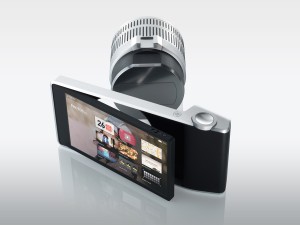
Artefact asks “What’s next in digital camera design?” with an interesting new prototype called the WVIL (Wireless Viewfinder Interchangeable Lens). According to the Artefact site: “The patent-pending WVIL system takes the connectivity and application platform capabilities of today’s smart phones and wirelessly connects them with interchangeable full SLR-quality optics. It is the inevitable solution for photographers who expect the power of modern mobile devices but who also demand uncompromised quality.”

In an article that features two compelling videos, Fast Company’s Co. Design suggests the WVIL provides a possible glimpse at the future of photography if digital cameras and cellphone cameras continue to merge, “leaving just a lens with a chip and a screen on the back of it.”

Artefact explains that many possibilities stem from this idea. According to Markus Wierzoch, WVIL’s lead industrial designer: “With the first digital cameras, the industry was quick to replace the medium, film, with a sensor, but the rest stayed the same. But modern connectivity opens up a lot of different options, like being able to detach the lens from the viewfinder. What if you could go to a party, mount three or four lenses all over the room, and control them all wirelessly with one ‘camera’?”

The Artefact team has cleverly redesigned the digital camera as “a camera operating system,” one that can be controlled from a touchscreen-based viewfinder and could quite possibly appeal to prosumer photographers who have outgrown their traditional DSLRs and no longer want a bag full of expensive gear. Artefact believes the WVIL could become a reality within three years.