Time Warner Cable has received a U.S. patent for technology that disables fast-forwarding of TV spots and other trick mode functions on physical DVRs, network-based DVRs and third-party recording devices.
The patent’s technology essentially offers the opposite functions of the Hopper DVR, recently launched by Dish Network.
“The ability to prevent trick mode functionality may be important for a number of reasons,” TWC writes in the patent. “Advertisers may not be willing to pay as much to place advertisements if they know that users may fast forward through the advertisement and thus not receive the desired sales message. Content providers may not be willing to grant rights in their content, or may want to charge more, if trick modes are permitted.”
Although Time Warner is unlikely to implement the features anytime soon, it has started to disconnect its Look Back tool and its Start Over function.
Look Back allows subscribers to watch a show they forgot to record within three days of its initial airing.
“The penchant viewers with DVRs have for skipping ads has prompted other multichannel providers to look at ways to preserve advertising placed in TV programs,” notes TVNewsCheck. Comcast recently submitted a patent application that details how it could deliver alternative commercials to subscribers that hit the fast-forward button on their remotes to skip ads.”
A look over time at the evolution of computing platforms shows PCs overtaking mainframes and minicomputers, and the coming ascendancy of mobile.
This year Android will surpass Windows in number of devices shipped, while iOS is expected to pass Windows by next year.
This week’s Microsoft announcement of Surface may indicate an abandonment of the software giant’s business model that has worked for more than three decades.
The industry is re-integrating with single companies now working to create operating systems, stores, service, and product design.
Apple was the first to go down this path. And it has both Google and Microsoft following in its footsteps.
“Whether Microsoft or Google will be successful in their integration efforts remains to be seen,” writes Horace Dediu for mobile firm Asymco. “The challenges are immense as the value of the existing chains are enormous and the bonds that tie the company to them very strong. Breaking these ties will seem like value destruction and corporate antibodies will be set loose to kill the transitions.”
The post offers compelling charts that graphically describe the changes afoot.
Facebook has introduced a new tracking service called Facebook Exchange. The service allows advertising companies to use cookies to track users after they visit the social network, and then allows the companies to bid on advertising space.
The tracking mechanism allows companies access to users’ Web browsing after they leave Facebook.com.
“So a Facebook user who visits a travel Web site to buy airline tickets but does not complete the purchase may see an ad on Facebook that will allow them to do just that,” reports The New York Times. “Facebook is only displaying the traditional thumbnail ads that users see in the right hand column of the page and not other ads like sponsored stories or mobile ads.”
Facebook assured users that it will not share any more data with advertisers, and users can opt out of the service either by disabling cookies in their browsers or by going to the “About Ads” page on Facebook.
Facebook hopes to take a step toward addressing its mobile challenges with real-time location-based advertisements.
“Phones can be location-specific so you can start to imagine what the product evolution might look like over time, particularly for retailers,” said Carolyn Everson, Facebook vice president of global marketing solutions. “We’ve had offers being tested over the last couple of months.”
“The holy grail of advertising is finding people when they are at their closest point to making a purchase,” suggested stock analyst Colin Sebastian in an interview with Bloomberg. “Having some location-based element to advertising can be very powerful, and if you combine that with all the personal data Facebook has, the potential is enormous.”
Facebook wants to expand mobile-only news-feed advertisements, as this would allow Facebook to monetize its increased mobile use.
With Bloomberg projecting 80 percent mobile spending increases over last year, Facebook needs to figure out an effective mobile strategy, or its stock prices may plummet even further.
Google has opened up its Google+ API to Flipboard, which will allow users of the popular mobile app to browse, publish and comment on Google+ posts.
The move is part of a larger effort to make Google+ more mobile-friendly, explains Bradley Horowitz, Google VP of product management in charge of Google+.
During a presentation at LeWeb in London, Horowitz demonstrated a Flipboard prototype running on an iPad, bringing “its familiar page-turning experience to Google+ text and photos,” reports CNET.
“The quick demo showed Flipboard’s typical interface, with its design of virtual pages that people can flip from one subject to another. One page showed various photos from a particular user, another textual comments, and a third a combination of some text with a large photos. He also showed a basic interface for posting a comment to Google+,” notes the post, adding that it looked more polished than the iPhone version.
Horowitz also suggested that Google+ tablet apps are in development. “We’re dramatically investing in mobile,” he said. “For us, mobile usage is not a problem. It doesn’t impact our business model. It’s a good thing for us,” perhaps giving rival Facebook a jab.
At the Windows Phone 8 event in San Francisco on Wednesday, Espoo’s Kevin Shields announced “a slew of new and updated apps to currently available Lumia handsets starting next week,” reports Engadget.
New apps include PlayTo, which allows for wireless sharing of video, music and photos. Another called Nokia Counter will monitor and manage data usage.
Mobile imaging was clearly a focus. “Given that this is the company behind PureView, current Lumia devices running Windows Phone will receive an imaging facelift of sorts, augmenting the baked-in optics via Camera Extras,” notes Engadget.
These imaging updates will upgrade the mobile imaging and photo-taking experience on the phone, giving it a self-timer, panorama, action shots and more.
The post also lists a 3.0 update to Nokia Music and My Commute, “which utilizes Drive to compute travel time and arrange routing.”
The Engadget editorial team offers some interesting comments in an extensive post that takes a close look at Windows Phone 8 and its possibilities. The following are some of the highlights:
“Rather tragically, there’s no upgrade path from any current Windows Phone device (the 7.8 stopgap notwithstanding). Your hot new cerulean blue Lumia 900? It’ll be obsolete this fall.”
“None of the handsets sold between today and the release of WP8 (this fall) will be upgraded, and none of the devices sold between now and then will run Windows Phone 8 apps… That may be the right thing to do for the platform’s future, but it’s sure going to sting for current users who, it must be said, are left feeling a bit like beta testers.”
“Microsoft ran down my list of complaints about Windows Phone and put a big red line through each of them. High-res screens, multi-core support, more homescreen customization and a seriously modern browser. All-in-all, Windows Phone 8 is shaping up to be a beastly update to the most visually appealing mobile OS on the block.”
“It’s common knowledge at this point that the availability of quality apps plays a huge part in the failure or success of a mobile platform, and the ‘Shared Windows Core’ provides just what’s needed to get more devs cooking up apps for WP8.”
“Unfortunately for Microsoft, balking a bit at the business space allowed Android and iOS time to offer up their own solutions. But Redmond’s got a long history of enterprise support to fall back on, and this slew of new features certainly looks promising with regards to Window Phone’s place in the business space.”
“Because of Windows’ momentum and massive market share, there will be plenty of people writing software for Windows 8, and with WP8, Microsoft just turned every one of those folks into developers for its mobile platform. In short, this, at the very least, should help Microsoft close the app gap, and it has the potential to eventually vault Windows Phone Marketplace ahead of its competition from Cupertino and Mountain View — and that bodes well for Windows Phone’s future.”
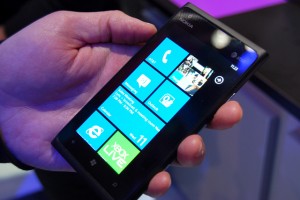
Microsoft announced ambitious plans for its Windows Phone 8 operating system at a sneak peek event on Wednesday.
The biggest take-away is that for the first time there will be one software platform — Windows 8 — across desktops, laptops, tablets and phones. Developers will be able to create apps that run across platforms, reports Engadget.
Windows 8 phones will support multi-core processors (up to 64), three screen resolutions (800 x 480, 1280 x 720 [16:9], and 1280 x 768), NFC for payments and SD cards. Nokia Maps is built in and includes use offline.
Unfortunately, current phones running Windows Phone will not be able to run Windows Phone 8. However, according to AllThingsD: “Microsoft is planning an update for existing devices that will bring one key feature of Windows Phone 8 — the more customizable Start screen. That update, known as Windows Phone 7.8, will be available for the current crop of Windows Phones from Nokia, HTC and Samsung.”
Microsoft is also promising enterprise-level support and security including encryption, secure booting, and the ability to deploy and manage apps.
The average person receives 63,000 words of information daily (about the length of a novel) from emails, tweets, Facebook updates and other assorted avenues.
Cue, formerly named Greplin, is an iPhone app that seeks to manage that data flow so you don’t have to remember where you saw something important or manually pull together related information.
The vision of its co-founders “is for Cue to be the first thing you check in the morning and the app you return to throughout the day to ‘find out what’s next,’ as the tagline puts it,” reports Businessweek.
You use Cue’s calendar to see what’s next in your schedule. The app pulls info from up to 26 data sources including email, Facebook, Salesforce, Yammer, and others to gather information on, for example, your meeting attendees’ contact information, Facebook updates from them, tweets they posted, addresses, etc.
The app can get smarter over time. It recognizes flight reservations, movie ticket confirmations and package deliveries so that it can automatically enter them on your calendar.
Interestingly, Robby Walker, co-founder and CTO of Greplin, feels that one day they may have to listen in on your conversations so they can catalog them for searching.
Turn-by-turn direction app Waze has expanded its features to include real-time gas prices in a new update. Waze will also integrate discounts at participating locations.
Waze boasts 19 million users across iPhone, BlackBerry, Windows Mobile, Android, and Symbian phone platforms.
The app offers live traffic data and directions. “Crowdsourced entirely from its users, the data makes Waze a far more useful alternative to standalone GPS units,” reports VentureBeat.
By adding gas information to its features, Waze could potentially lure customers from cheap fuel apps such as Gas Buddy and Fuel Finder.
“Waze has also finally added the ability to use waypoints on your trips, allowing you to plot more than one location for a single journey,” notes the post. “The company also has brought its nifty voice control feature to Android phones with this latest update.”
Software start-up Magnifis has announced the release of Robin, a voice-activated mobile assistant for Android devices.
“Robin is like a mashup of Siri and Waze. It’s a voice-controlled mobile app designed for drivers to use in their cars. Like Waze, it’s motion-activated rather than button-activated, which is easier for complying with distracted driving laws and using on the road, and it can proactively warn you about upcoming traffic or speed traps,” details CNET.
However, the post suggests that Robin is not a Siri-killer just yet, as Siri has the ability to send “text messages and play music, making it a true voice-activated mobile assistant,” while Robin focuses mostly on driving-related tasks such as learning the driving schedules and habits of the user.
Robin is still in beta, and available for free at the Google Play store.
A new update to the My Xbox Live app allows users to control their Xbox 360 gaming console using an iPhone.
Although the iOS app is available for the iPod touch and iPad, this specific feature only works on the iPhone.
To access the feature, users must connect their Xbox 360 and iPhone to the same Wi-Fi network. Users must then connect their iPhone to the Xbox 360 via the Console Settings menu.
Once connected, the app allows users to “navigate through the Xbox menu using the onscreen buttons on your iPhone,” reports CNET. “Functionality really doesn’t go beyond that, but it might be easier to scroll through the Xbox’s various media apps and content delivery portals this way.”
The post includes step-by-step instructions and a video tutorial. Once the video plays through, a second video report offers additional details regarding the My Xbox Live app.
Spotify’s new app update allows users to access Spotify Radio on iOS devices for free. Previously, the recommendation-based application was only available on mobile for Spotify Premium subscribers.
Spotify Radio is similar to Pandora and Slacker in that it allows users to “pick a song, album, artist, or playlist, and build a radio station using it.” Spotify then “makes recommendations based on millions of hours of user data combined with data based on playlists users create — since playlists are already places where users organize similar content,” reports The Verge.
The app will employ a thumbs up and thumbs down rating service. The ratings will not apply to all playlists, but rather the currently playing playlist only, since “people often create playlists for specific moods.”
Inter-device functionality allows users to start a playlist on an iPad and continue listening on an iPhone. Social functionality enables songs and playlists to integrate with friends’ Facebook streams.
The updated app will be available in the next few days for all users in the United States, and to Premium subscribers internationally.
It is not yet available on Android, but according to Spotify: “we think it’s core to the mobile experience, and we’re looking to bring it to all of the major platforms in due time.”
Sites like Vevo and YouTube have added revitalization to the music video business. Those sites pay fees to major music publishing companies for music videos, but according to CNET, the independent publishers have been left out.
On Tuesday, the National Music Publishers Association announced that it’s reached a “new model agreement” with Universal Music Group that aims to make sure indie publishers get their fair share.
“David Israelite, chief executive of the NMPA, told CNET this morning that the deal with Universal calls for the label to pay indie publishers directly and is the first of its kind with one of the top four record companies,” explains the post. “He said Vevo, the Web music video service that offers music from three of the four major labels, announced that it generated $150 million in revenue last year and has its sights on topping the $1 billion mark in coming years.”
Israelite also stated the deal is retroactive to 2008 and that negotiations with other major labels outside of Universal are in the works.
SoundExchange, a nonprofit group that processes payments for online streams, reports it has now paid over $1 billion to artists and record companies since 2000.
Although SoundExchange represents a relatively small stream of revenue for most record companies, it is increasingly making an impact.
“The way the industry is going, it is about multiple revenue streams, not just one,” explains SoundExchange president Michael Huppe, adding that digital music streams can help record companies remain profitable as traditional sales decline.
“SoundExchange collects money from Sirius XM Radio, Pandora and other forms of Internet radio,” reports The New York Times. “For most labels and performing artists, this is the only money their recordings earn for radio play, since terrestrial radio pays only songwriters and music publishers. (‘On-demand’ digital services like Spotify and Rhapsody, which let users choose exactly what songs to listen to, generally pay record companies directly.)”
SoundExchange paid out only $15.6 million in 2004, but already reports payments of over $100 million for this year.
However, some Internet radio companies are not pleased. Sirius, for example, sued SoundExchange over the right to make direct deals with record companies for recording performance royalties. Last year, Sirius paid a total of $200 million in royalties.