According to Senator Charles Schumer of New York, the current lawsuit against Apple and other e-book publishers “could wipe out the publishing industry as we know it.” The Wall Street Journal ran Schumer’s editorial on Tuesday.
The Department of Justice is targeting Apple, Hachette, Harper Collins, Macmillan, Penguin, Pearson, and Simon & Schuster for “allegedly colluding to fix e-book prices,” reports Ars Technica.
“If publishers, authors and consumers are at the mercy of a single retailer that controls 90 percent of the market and can set rock-bottom prices, we will all suffer,” comments Schumer in reference to Amazon, which led the e-book market until Apple’s introduction of the iPad and iBookstore.
“Choice is critical in any market, but that is particularly true in cultural markets like books,” he adds. “The prospect that a single firm would control access to books should give any reader pause.”
When it launched its bookstore in 2010, Apple decided to go with an “agency model,” which “allowed them to set their own prices for e-books,” explains Ars Technica.
The article further notes that “Amazon’s wholesale model allowed the company to sell e-books at prices below cost, a strategy that irked publishers because they felt Amazon was undercutting their prices and devaluing their products in the marketplace. Throughout 2010, publishers pushed Amazon to switch to the agency model as well, and eventually, it did.”
“As our economy transitions to digital platforms, we should be celebrating and supporting industries that find ways to adapt and grow,” writes Schumer. “By developing a pricing model that made e-book sales work for them, publishers did just that.”
“I am concerned that the mere filing of this lawsuit has empowered monopolists and hurt innovators,” he suggests. “I believe it will have a deterrent effect not only on publishers but on other industries that are coming up with creative ways to grow and adapt to the Internet.”
DreamWorks Animation launched a new mobile app for the iPhone and iPad this week. “Ptch” is an app from the first start-up launched through DWA.
The app “allows users to easily create and share personalized multimedia compositions called ‘ptches,’ using videos, photos, and music from their own mobile devices and social feeds,” reports Forbes.
“With the ability to use media assets from Instagram, Facebook, YouTube, Google+, Tumblr, Twitter, and Viddy, the platform allows you to easily move pictures and video snippets around into frames that combine into one-minute video creations,” explains the article.
Users can produce the videos with fonts, colors, graphics and music (up to 100 hit songs included in the app) to tell a story in video form. And if producers would like to share the assets that comprise their videos, other users can use them to remix new videos.
“We talk about this as what we’re calling ‘living media,’” says Ed Leonard, CEO of Ptch and former CTO of Dreamworks. “What we’re thinking about is five years from now, everything is going to be living media. You see something you like, quickly change it a bit, and share it. It’s the idea of reshaping things.”
The article includes a 2-minute promotional video and links to samples of ptches made by early users.
Online auction and shopping site eBay announced its Q2 numbers on Wednesday, saying that it expects eBay and PayPal mobile to each transact $10 billion this year.
CEO John Donahoe noted that the projected numbers more than double the 2011 totals, describing it as “a staggering surge” in mobile commerce.
The new projections are up from January, largely due to the unpredictability of mobile commerce, along with eBay’s strong investment in it. “The line is blurring between online and offline, and that behavior is happening because of the investments we have made in mobile,” said Donahoe.
The eBay chief spoke about why Amazon and eBay are doing well in the realm of mobile commerce: “If you think of it as an app-based world, we aren’t going to carry around a Neiman Marcus app and a Walmart app and a Best Buy app. By being a marketplace, it’s a single app that gives you access to a lot of things. That’s why we are getting viral traction on it.”
And to further boost its mobile presence, eBay acquired Card.io on Tuesday. “The year-old company allows users to skip the tedious process of entering their credit number into various fields at check-out by taking a picture of the card,” reports AllThingsD.
According to Donahoe, this could allow consumers to create a PayPal account by taking a quick snapshot of their credit card and ID card.
Facebook’s advertisements boast a 1.1 percent mobile click-through rate, according to a study from social media specialist TBG Digital.
This percentage is roughly four times higher than Twitter’s 0.266 percent rate. TBG measured 406 billion impressions in more than 190 countries.
“Mobile growth has been troublesome for Facebook, and the company made a case before its IPO that mobile was one of its biggest risk factors,” reports VentureBeat. “The company might even be planning to build its own phone to deal with this issue.”
“But the new study at least provides a glimmer of hope for the company’s mobile ad prospects and shows that its newsfeed engagement is working.”
Germany had the highest CPM increase (31 percent) quarter over quarter, followed by the U.S. (25 percent), Canada (21 percent) and the UK (7 percent).
“Another important aspect of the report is that Facebook’s cost-per-thousand impressions (CPM) increased by 58 percent between Q2 2011 and Q2 2012. This means that Facebook’s ads are generally working well enough that the company can keep charging more for them,” notes the post.
According to a Nomura Securities’ quarterly report on prime time TV viewing, “the percentage of broadcast commercials skipped by DVR users dropped to 46.7 percent in the 2011/2012 season from 58.8 percent in 2007/2008. For cable, 50.4 percent of the ads were skipped this past season vs. 52.8 percent in 2007/2008,” reports Deadline.
Slate culture critic June Thomas believes more viewers are watching commercials because of the way advertisers and cable networks are delivering those ads.
Thomas cites a recent example of this while watching the program “Drop Dead Diva.” Right as the commercial break begins and fast-forwarding starts, a commercial appears featuring the show’s main character, still in character, promoting a hair product. The viewer is tricked into stopping the fast-forward function.
The tagline for this commercial: “Get to the essence of your inner diva. Keep watching Drop Dead Diva, brought to you by Herbal Essences.”
TNT has been implementing a similar type of advertising during its hit show “The Closer” that focuses on the lead character’s sweet tooth. At the end of a show segment, the camera pans to discarded candy wrappers and a handwritten note: “Need the energy to grind out one more confession? Go nuts.” A PayDay bar appears and the interstitial cuts to a PayDay commercial.
“Whether it’s the ‘Drop Dead Diva’ ad featuring a character from the show, or the TNT interstitials that appear to contain a written clue, these fake-outs cause the fast-forwarding viewer to pause to figure out if what’s flashing by is content or commerce,” notes Thomas. “It’s annoying, but it’s good advertising. Not only did I watch those spots, I even remember the names of the sponsors.”
This could be a better alternative than overt product placement, which has shown up in more shows recently and can be irritating to the viewer.
The Internet Defense League (IDL) officially launched Thursday. IDL will actively work against future laws that seek to regulate copyrighted content such as the Stop Online Piracy Act (SOPA) and Protect IP Act (PIPA).
Members of the organization include Rep. Darrell Issa (R-CA), WordPress, Mozilla, Electronic Frontier Foundation, Reddit and OpenCongress/PPF.
“What Americans understand that the government doesn’t understand is that Americans can do things well without government regulations,” explains Issa.
“I gained prominence during SOPA because my entire way of life was being threatened,” adds Alexis Ohanian, Reddit co-founder. “We’ve been busy spending our attention innovating instead of lobbying on Capitol Hill.”
Interestingly, The Motion Picture Association of America, which supported SOPA and PIPA, released the following statement:
“We couldn’t agree more with the Internet Defense League that an Internet that works for everyone is critical to both our economy and our national identity — and in order for the Internet to work for everyone, we need to set balanced policies that help protect hard work while still encouraging the freedom to create. The creative community, like the tech community, is built entirely on ideas and innovation. The free flow of information on the Internet is critical, but it can’t be promoted at the expense of creators and their rights.”
Symbolic of the alert code it will send out to members to mobilize their activities, IDL projected a “cat signal” into the sky on Thursday night in four cities — New York City, San Francisco, Washington D.C. and Ulaarbataar, Mongolia.
Exent has partnered with Verizon Wireless to bring its social gaming application GameTanium to Verizon Android devices.
GameTanium offers unlimited access to 150 mobile games for $5.99 per month per device. The offerings include 100 smartphone games and 50 tablet games.
“The GameTanium app can be downloaded from Verizon Apps on 30 Android smartphones and two Android Tablets, including Motorola’s Droid Razr, HTC’s Droid Incredible 4G LTE, and Motorola’s Droid Xyboard 8.2,” reports Digital Trends.
Similar social gaming services exist, such as Apple’s Game Center and Amazon’s GameCircle for Kindle devices, but GameTanium serves as more of a curation service.
“Exent draws upon its vast gaming experience to curate and catalog the best mobile games while working closely with our operator partners to ensure the catalog is consistent with their audience profile,” explains Exent CEO Zvi Levgoren.
GameTanium features parental ratings, customer reviews, screenshots and a helpful FAQ. Exent also offers weekday customer support via email, SMS or phone.
“For those of you avid mobile gamers on Verizon Android devices, this service will be right up your alley,” suggests the post. “For Android device owners under non-Verizon carriers, we think it’s just a matter of time before GameTanium makes its way to your service provider.”
Last week we reported that Judge Richard Posner, a prolific jurist who sits on the 7th U.S. Circuit Court of Appeals in Chicago, was questioning the need for software patents.
Posner, who dismissed the Apple-Motorola case that involved alleged infringement of patents for smartphone components, has written a piece for The Atlantic in which he describes his desire to see patent law reformed in the United States.
“With some exceptions, U.S. patent law does not discriminate among types of inventions or particular industries. This is, or should be, the most controversial feature of that law. The reason is that the need for patent protection in order to provide incentives for innovation varies greatly across industries,” he writes, adding that “most industries could get along fine without patent protection.”
Posner warns of the risk of monopolies in an environment where so many patents are granted: “A patent blocks competition within the patent’s scope and so if a firm has enough patents it may be able to monopolize its market. This prospect gives rise to two wasteful phenomena: defensive patenting and patent trolls.”
He describes defensive patenting as “getting a patent not because you need it to prevent copycats from making inroads into your market, but because you want to make sure that you’re not accused of infringing when you bring your own product to market.”
Patent trolls are “companies that acquire patents not to protect their market for a product they want to produce…but to lay traps for producers, for a patentee can sue for infringement even if it doesn’t make the product that it holds a patent on.”
Posner suggests the following actions: “reducing the patent term for inventors in industries that do not have the peculiar characteristics of pharmaceuticals that I described; instituting a system of compulsory licensing of patented inventions; eliminating court trials including jury trials in patent cases by expanding the authority and procedures of the Patent and Trademark Office to make it the trier of patent cases, subject to limited appellate review in the courts; forbidding patent trolling by requiring the patentee to produce the patented invention within a specified period, or lose the patent; and (what is beginning) provide special training for federal judges who volunteer to preside over patent litigation.”
Samsung’s 75-inch ES9000 LED Smart TV was recently unveiled for the Korean market and will be making its way to the U.S. in August.
For those with $9,999 to spend on a television, this 3D-capable, LED-backlit set is reportedly one to behold. It is currently on display in New York City as part of the Samsung-sponsored SpaceFest at the Intrepid Sea, Air & Space Museum.
“The 75-incher’s bezel measures just 0.31 inches, and the frame sports a rose-gold finish,” reports Engadget. “There’s also a built-in Web camera that retracts when not in use, and the TV comes with four pairs of 3D glasses.”
“The ES9000 includes the complete suite of Samsung Smart TV features — Smart Interaction, Smart Content and Smart Evolution — that were introduced earlier this year,” notes the press release.
“Smart Interaction enables users to control and interact with their TVs in a more intuitive way through voice, gesture and face recognition controls,” according to the company. “Smart Content makes available a broad range of premium and signature content that can be shared across multiple devices.”
Additional features include Sound Share for wirelessly connecting audio via Bluetooth, a dual-core processor that provides speed for accessing apps or browsing the Web, and the highest contrast ratio on a Samsung Smart TV to date.
Yahoo has begun to push its “Beyond Gold” 2012 Olympics coverage. The company plans to offer content online and on various apps and screens.
Fans can get started using Yahoo Hub, a subsection of the Yahoo Sports site, which will be “available on PCs, mobile, and tablet browsers, and will feature breaking news, photos, highlights, reporting and analysis from the Games,” reports TechCrunch.
As for apps, Yahoo will offer IntoNow, which the company acquired last year. “Users of the second-screen app will be able to sync it up with TV coverage, to get medal counts and images from the Games, as well as Twitter commentary and trivia to keep viewers engaged,” according to the post.
Yahoo’s own Sportacular app will “feature a special tab with personalized access to news and information about the Games,” notes TechCrunch. For those with connected TVs, there will also be a Beyond Gold app available.
According to company stats, Yahoo Sports had 32 million unique visitors during the 2010 Vancouver Games and 38.5 million in 2008 for the Beijing games.
This summer’s London Olympic games will represent “a monumental experiment for network television in the digital age,” reports the Wall Street Journal.
Network executives at NBC are using a new formula, providing cable and satellite subscribers with live online content.
Including NBC’s cable channels and the online content, the network plans to broadcast 5,535 hours of Olympics coverage, “about 2,000 hours more than the Beijing games and compared with a total of 14 hours from the 1964 Tokyo games,” notes the article.
Choosing to broadcast so many live events online could be a risky move for NBC. “At stake is the billions of dollars NBC paid for U.S. broadcast rights and hundreds of millions in advertising revenues in an audacious bet that viewers will still come to the network at prime time,” explains WSJ.
The network’s hope is that chatter over social networks will fuel viewership, creating an environment in which people want to see the action for themselves during prime time re-runs.
And that hope is a very possible reality in this current, connected climate. “NBC confronts a very different world from Mr. Ebersol’s time. In the last four years, Facebook has grown to more than 900 million subscribers from 100 million, while Twitter has grown from near-nothing to more than 140 million active users tweeting some 340 million messages a day,” according to WSJ.
LinkedIn has redesigned its interface, but the changes appear to be more than cosmetic. The company may be aiming to compete as more of a social content sharing platform.
This week the company “released a redesigned LinkedIn Today page that included much-needed social features,” reports Digital Trends. “LinkedIn has confirmed the launch of a simpler homepage, which is suspiciously similar to Facebook’s Newsfeed. While LinkedIn is promoting the redesign’s ease of use, what may not be so apparent is LinkedIn’s slow transformation from a resume network to a content sharing platform.”
“We’ve started to roll out a simpler and easier way to navigate Homepage experience that offers quick access to the relevant information and updates that help you be great at your job,” explains Caroline Gaffney, LinkedIn project manager.
“The Homepage and LinkedIn Today redesign coupled with the integration of social features is evidence of LinkedIn’s strategy to become the user curated content and news platform that Facebook and Twitter have been aggressively competing to become,” suggests Digital Trends.
LinkedIn hopes the redesign, which will be officially put in place in a couple of weeks, will encourage users to spend more time perusing the site rather than simply visiting for a few minutes to check their profile and then logging off.
AT&T has unveiled a data sharing plan that is essentially identical to Verizon’s Share Everything.
Mobile Share provides tiered plans that allow customers to share data across up to ten devices. As with Verizon’s Share Everything, all Mobile Share plans come with unlimited messages and voice.
Prices vary slightly between Verizon and AT&T. The price distinctions are because AT&T offers different smartphone surcharges based on the amount of data purchased.
AT&T charges $15 per gigabyte in overage — the same charge as Verizon’s Share Everything.
“Individual plans are a key differentiator between the nation’s two biggest carriers: the introduction of Mobile Share has no effect on the availability of AT&T’s existing offerings, which means new customers won’t be forced into a data sharing arrangement if they don’t want it. Verizon, meanwhile, has phased out its entire postpaid portfolio outside of Share Everything,” reports The Verge.
Mobile Share is scheduled to launch in late August.
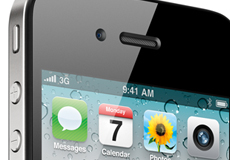
Apple’s upcoming iPhone 5 will feature in-cell touch display technology to reduce thickness, reports the Wall Street Journal.
The emphasis on keeping the iPhone thin suggests Apple does in fact plan to increase the phone’s screen size, as has been rumored for months.
Current iPhone models use a layered structure of LCD, capacitive sensors and glass. But Sharp and Japan Display are making LCD displays that feature built-in touch technology.
This technology will allow Apple to eliminate layers in the phone and keep the device sleek and thin. It will also allow the company to simplify the supply chain and potentially reduce costs by no longer acquiring touch panels and LCD panels from different suppliers.
“The technology integrates touch sensors into the LCD, making it unnecessary to have a separate touch-screen layer,” explains WSJ. “The absence of the layer, usually about half-a-millimeter thick, not only makes the whole screen thinner, but improves the quality of displayed images, said DisplaySearch analyst Hiroshi Hayase.”
The in-cell touch display technology should be crucial to Apple regarding its ongoing competition with Samsung in the smartphone market. Samsung has been touting its organic light-emitting displays as a distinction from other phones. The company’s “Galaxy S III comes with a 4.8-inch OLED screen and is thinner than the current iPhone,” notes WSJ.
The new iPhone is expected to be available sometime this fall.
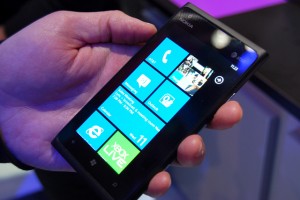
Nokia will cut the price of its Lumia 900 to $49.99 when subscribers agree to a two-year contract from AT&T, reports the Wall Street Journal.
The Lumia 900 was initially offered for $99 with a two-year agreement when it hit the market in April.
“This move is a normal strategy that is put in place during the life cycle of most phones,” explains Nokia spokesman Doug Dawson. It “allows a broader consumer base to buy this flagship device at a more accessible price.” He noted that Samsung’s Galaxy S II also experienced a price drop during a similar time frame.
Nokia hopes the price cut will bolster falling sales. Last month, Microsoft announced the next generation Windows 8 operating system, and also revealed the Lumia 900 will not receive an update to the system.
“If the phone wasn’t selling well before that bit of news dropped, it’s likely selling much worse now,” comments Mashable.
The Lumia 900 rode positive reviews to early success, but Nokia has struggled since the initial burst. The company plans to lay off 10,000 workers by the end of 2013 and close factories in Finland, Germany and Canada.
 According to Senator Charles Schumer of New York, the current lawsuit against Apple and other e-book publishers “could wipe out the publishing industry as we know it.” The Wall Street Journal ran Schumer’s editorial on Tuesday.